
Holding Doctors and Hospitals Accountable for Wrong-Site Surgery in Denver
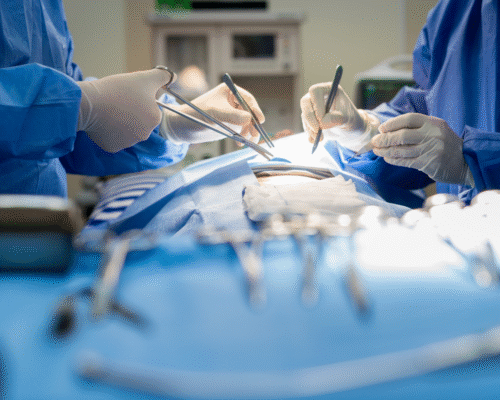
Wrong-site surgery can change a patient’s life in a single procedure. A person enters a Denver hospital or surgical center expecting treatment for a specific limb, organ, or condition, then wakes up to learn that either the operation happened on the wrong part of the body, the wrong procedure was performed, or the intended surgery still needs to be done. Our Denver wrong-site surgery lawyers at Leventhal Puga Braley, P.C. are here to assist you with a surgical malpractice claim in Colorado.
These situations require careful legal review. Surgical teams follow rules meant to prevent mistakes like operating on the wrong person, doing the wrong procedure, or working on the wrong site. When these safeguards fail, patients may need more surgery, face permanent injuries, risk infection, have scars, lose mobility, suffer emotional harm, and deal with a longer recovery than expected.
For a no-charge initial consultation after a wrong-site surgery in Denver, call Leventhal Puga Braley P.C. at (303) 759-9945 or toll-free at (877) 433-3906.
Wrong-Site Surgery Medical Malpractice Claims
The standard of care is the level of skill, attention, and decision-making that a reasonably careful healthcare provider would use under similar circumstances.
In a surgical setting, that standard includes more than technical skill in the operating room. It also includes the steps that should happen before the first incision. The team must confirm the correct patient, procedure, and surgical site. A failure at any of those points can become central to a surgical error malpractice claim in Colorado.
Wrong-site surgery can take several forms, including:
- Wrong Body Part: A surgeon may operate on the wrong knee, shoulder, eye, hand, or foot.
- Wrong Side of the Body: A surgical team may prepare or operate on the left side when the right side was intended, or vice versa.
- Wrong Patient: A patient may receive a procedure that was scheduled or planned for someone else.
- Wrong Organ or Internal Structure: In a more complex case, the wrong organ, spinal level, or internal structure may be treated because records, imaging, consent forms, or operating room communication were mishandled.
The legal analysis does not stop at the fact that the wrong site was involved. The patient must prove a breach of the standard of care, prove that this breach is a cause of the injuries, and prove they suffered damages as a result of those injuries.
This process is important because a wrong-site surgery lawsuit in Denver often involves many layers of review. Medical records, consent forms, operative notes, hospital policies, imaging, witness statements, and expert opinions can all help show where things went wrong and who was responsible for preventing the mistake.
Surgical Safety Rules Require Verification
Wrong-site surgery clearly shows why surgical safety systems are so important. The Joint Commission’s Universal Protocol says that wrong-person, wrong-site, and wrong-procedure surgeries can and should be prevented. This protocol uses several safeguards, like checking everything before the procedure, marking the site, and taking a final pause before starting.
Pre-procedure verification should confirm that the patient, procedure, records, imaging, implants, equipment, and planned surgical site match. Site marking helps make the intended surgical location visible and clear. The time-out gives the full surgical team one final pause to confirm the patient, procedure, and site before anyone proceeds.
A Denver patient scheduled for left knee surgery, for example, should not have the right knee prepared and operated on because a chart was misread or a mark was placed on the wrong side. A patient scheduled for one spinal level should not undergo surgery at another level because imaging, notes, or intraoperative communication failed. These examples are not minor paperwork problems. They are the kind of surgical failures that can produce lasting physical and emotional consequences.
Claims about hospital negligence after surgical mistakes in Colorado often look at whether the hospital had safe systems and if staff actually followed them. Written policies are not enough if staff skip important checks, rush through the time-out, ignore conflicting records, or treat site marking as just a routine instead of a safety step.
Accountability May Extend Beyond the Surgeon
Wrong-site surgery claims often involve more than just the surgeon. The operating room is a team setting. Nurses, anesthesiologists, surgical techs, residents, schedulers, and hospital administrators can all play a role in how a wrong procedure or wrong-site mistake occurs.
A hospital may face responsibility in several ways, including:
- Employee Negligence: A hospital may be responsible when an employee’s negligent conduct occurs within the scope of that employee’s work.
- Unsafe Internal Systems: A hospital may face scrutiny when its own policies, procedures, or oversight fail to prevent surgical mistakes.
- Weak Safety Policies: Poorly designed surgical safety rules may support claims based on institutional conduct.
- Poor Training or Staffing: Inadequate staff training or understaffing may contribute to preventable errors in the operating room.
- Recordkeeping and Scheduling Failures: Confusing records, defective scheduling procedures, or repeated failure to enforce time-out rules may show a broader hospital-level breakdown.
A wrong-site surgery might be caused by one provider not stopping to check, but it can also show bigger problems within the hospital or surgical center. A rushed culture, unclear roles for site marking, poor communication, or missing records can all lead to preventable mistakes reaching the patient.
Legal review should look at every decision point. Who checked the surgical site? Who marked the body? Who reviewed the consent form? Who checked the imaging? Who led the time-out? Who had the authority to stop the procedure if something was wrong?
These questions help show if the claim is about one person’s mistake, a team failure, or hospital negligence. In serious surgical injury cases, this difference can affect what the claim covers, what evidence is needed, and what damages the patient might recover.
Leventhal Puga Braley P.C. Handles Serious Surgical Negligence Claims
Leventhal Puga Braley P.C. represents patients and families in serious medical malpractice cases involving surgical errors, hospital negligence, and life-changing injuries. Our Denver medical malpractice attorneys evaluate whether the evidence supports a breach of the standard of care, whether that breach caused the injuries, and the resulting damages.
High-Stakes Denver Medical Malpractice Claims: Your Advocate for Justice
The firm has handled high-stakes medical malpractice cases for decades. Founded in 1981, Leventhal Puga Braley P.C. is a trial-tested firm with a long record in complex medical negligence litigation. Our work includes cases involving surgical malpractice, hospital errors, birth injuries, brain injuries, delayed diagnosis, medication errors, nursing negligence, and other serious failures in medical care.
We have won major medical malpractice cases and are honored to have earned an AV Rating from Martindale-Hubbell. We can go the distance and have appeared in the Colorado Supreme Court to get justice for our client.
Wrong-site surgery cases need thorough investigation and careful presentation. Legal review may include surgical records, hospital protocols, expert analysis, operating room communications, consent forms, imaging, and testimony from those involved. We prepare these cases with the attention and detail needed for serious litigation.
For a no-charge initial consultation about a wrong-site surgery claim in Denver, call Leventhal Puga Braley P.C. at (303) 759-9945 or toll-free at (877) 433-3906.
Contact Us
Categories
Recent Posts
 Locations We Serve
 Locations We Serve
- Arizona
- Colorado
- Hawaii
- Iowa
- Minnesota
- New York
- North Carolina
- Washington
- Wisconsin
- Wyoming